Virtual planning
Put together your individual van racking system.
Protective conductor resistance measurement on class I devices is one of the most important tests, for example on household, medical and consumer appliances as well as in general mechanical and plant engineering. Proof of the effectiveness of the protective conductor connection between the mains connection on one side and every touchable conductive (usually metallic) housing part on the other side represents the "life insurance" for the user of the electrical equipment. Only if this connection is 100% permanently connected will the upstream fuse element safely disconnect the respective device from the mains in the event of a short circuit in the housing, for example. Forced earthing of the housing parts also means that no dangerous voltage potential can arise between the housing and the operator's standing surface.
Protective conductor resistance measurement on class I devices is one of the most important tests, for example on household, medical and consumer appliances as well as in general mechanical and plant engineering. Proof of the effectiveness of the protective conductor connection between the mains connection on one side and every touchable conductive (usually metallic) housing part on the other side represents the "life insurance" for the user of the electrical equipment. Only if this connection is 100% permanently connected will the upstream fuse element safely disconnect the respective device from the mains in the event of a short circuit in the housing, for example. Forced earthing of the housing parts also means that no dangerous voltage potential can arise between the housing and the operator's standing surface.
The principle of PE conductor resistance measurement on protection class 1 products is intelligently simple. From a PELV power source (usually 6 or 12 VAC open-circuit voltage), a current is conducted from the protective conductor connection to all touchable metal parts. The resistance is determined from the voltage (drop) and the flowing current. Typical limit values are between 100 and 200 mΩ. However, other limit values are also introduced depending on the product to be tested. Due to the low test voltage, no additional safety measures are required for the protective conductor test.
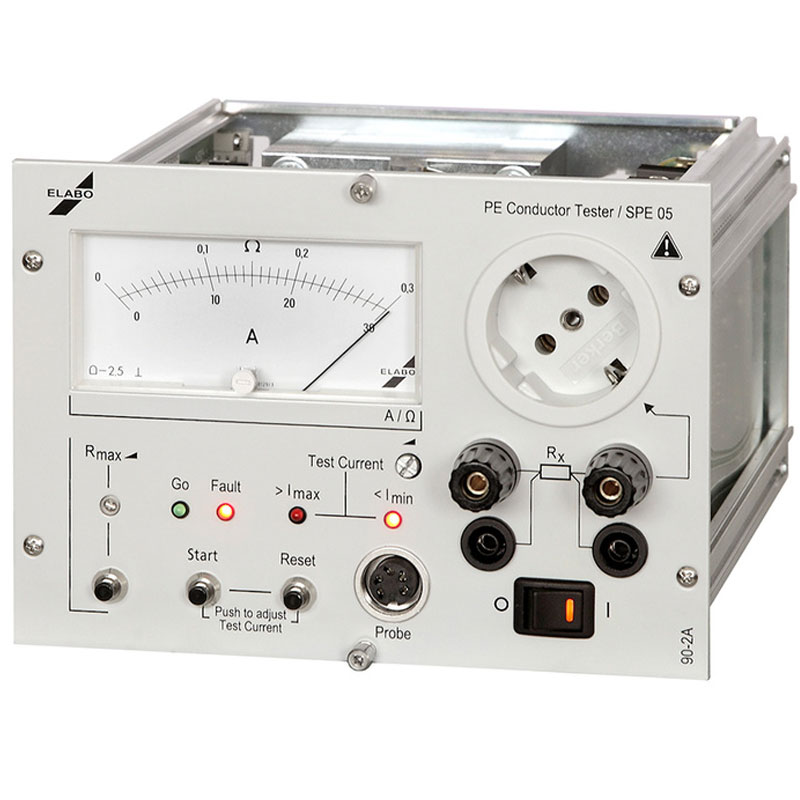
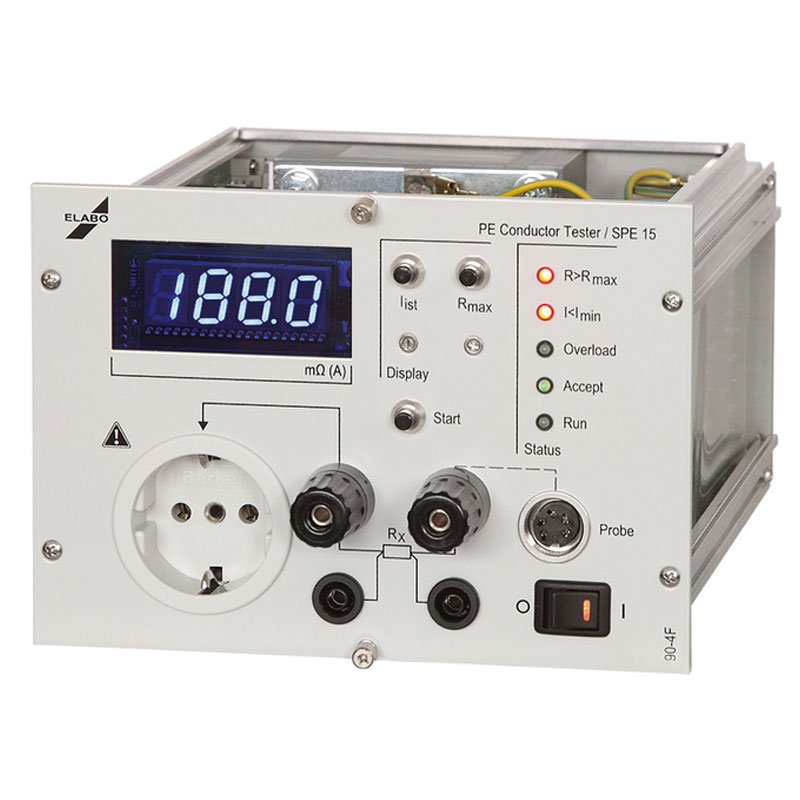
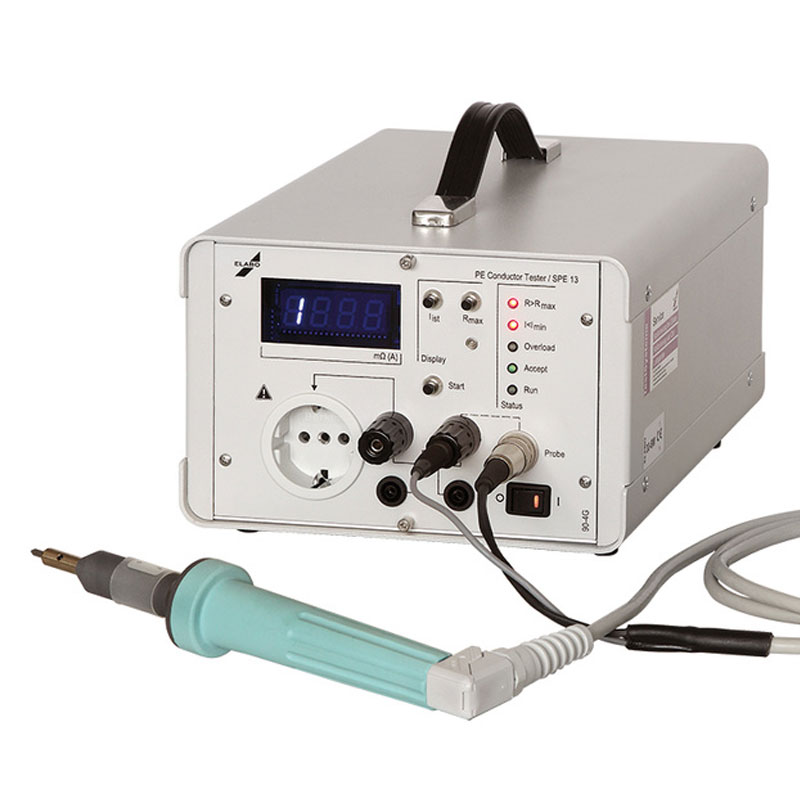
bott offers various devices for testing the protective conductor resistance. These differ primarily in the different measuring ranges. The following gradations are available for the different categories:
Various measuring devices are available depending on the standard requirements of the devices to be tested. bott offers all measuring devices for protective conductor resistance as a complete version with a housing for mobile use or as a plug-in version for a test device cabinet. In this way, the test station can be set up or extended as required.
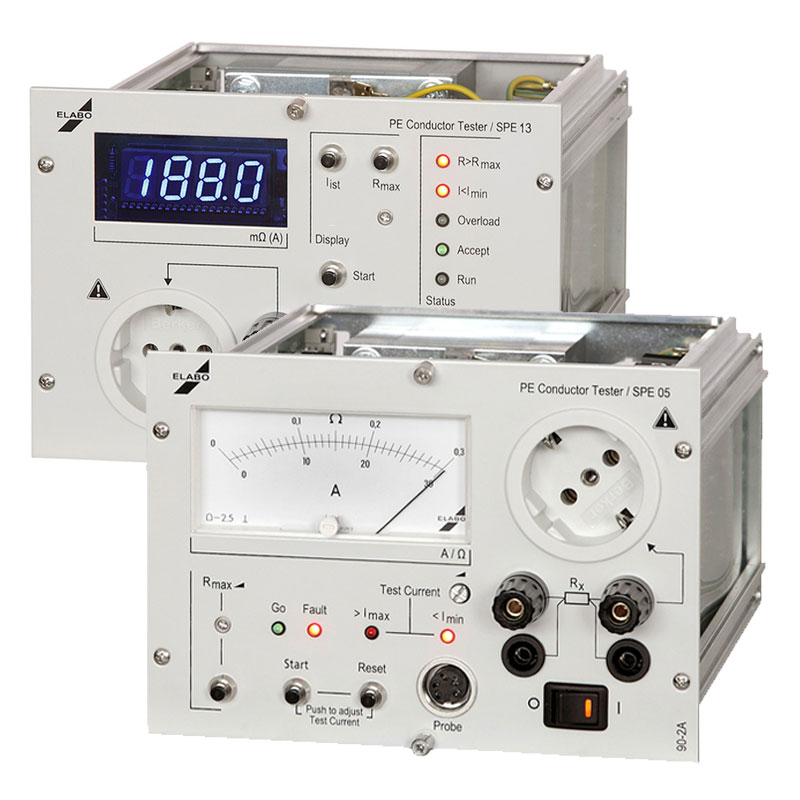
bott offers various devices for testing the protective conductor resistance. These differ primarily in the different measuring ranges. The following gradations are available for the different categories:
Various measuring devices are available depending on the standard requirements of the devices to be tested. bott offers all measuring devices for protective conductor resistance as a complete version with a housing for mobile use or as a plug-in version for a test device cabinet. In this way, the test station can be set up or extended as required.