
Virtual planning
Put together your individual van racking system.
Surge voltage testing is carried out with extremely short high-voltage pulses and is ideal for detecting faults and weak points within windings. In contrast to high-voltage testing with DC or AC voltage, it enables the detection of interturn faults, position faults or phase faults.
Identification of latent faults due to the "runtime effect"
Gentle testing due to minimal energy impact
Very short test duration and therefore ideal for repeated tests
High sensitivity due to short rise time (~100-200 ns)
Can be automated for serial test procedures
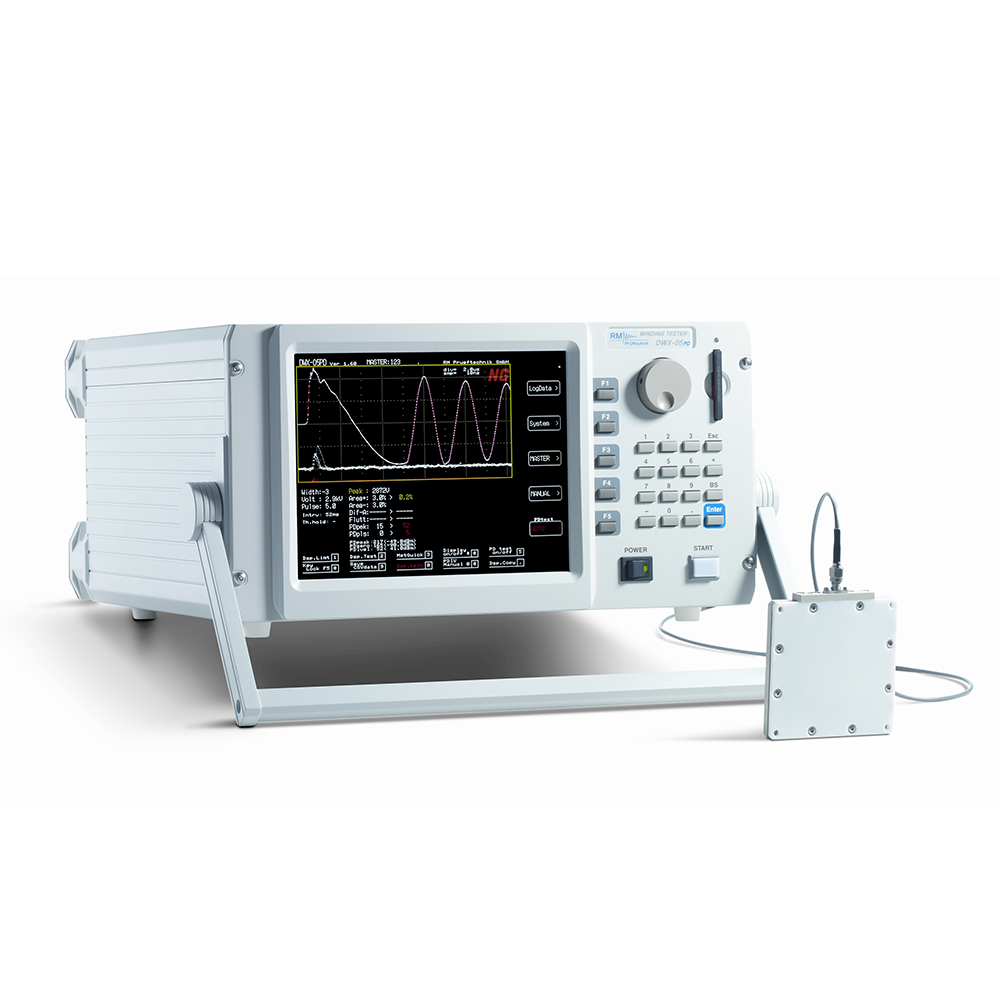
The surge voltage test is performed using short high-voltage pulses that are applied to the winding of an electrical component. These pulses enable the detection of insulation faults between windings, layers or phases.
The device analyzes the resulting voltage curves and detects deviations that may indicate defects.
Regular surge voltage testing is essential in order to identify damage or material fatigue in windings at an early stage. It contributes to quality assurance and prevents unplanned failures of electrical machines. It also ensures that products comply with safety and standard requirements.
Surge voltage testing is essential in many sectors, particularly in the electrical, automotive and mechanical engineering industries. By complying with test standards, potential failures can be reduced and the longevity of windings can be guaranteed.
For testing, a high-voltage pulse sequence is applied to the winding of the component. A measuring device records the voltage response and compares it with a reference curve. Deviations indicate possible insulation faults or winding short circuits. The procedure is non-destructive and can be carried out repeatedly. Surge voltage testing is used in many areas: in development in the electrical and automotive industries, in quality assurance, in service and maintenance, in production monitoring, in research and laboratory environments.


